


Jim Wagner’s Tone Journey: The History of Jim Wagner Pickups

Pickups are instruments of pure passion for me. Capturing the stories of the people who pour their hearts into these little tone gems—and who create them—has always been one of the primary goals of Tone Journey. Because, in my view, the stories of builders beyond Larry DiMarzio and Seymour W. Duncan also need to be told, recorded, and archived by someone. That is the fundamental reason behind my exclusive interviews with pickup makers.
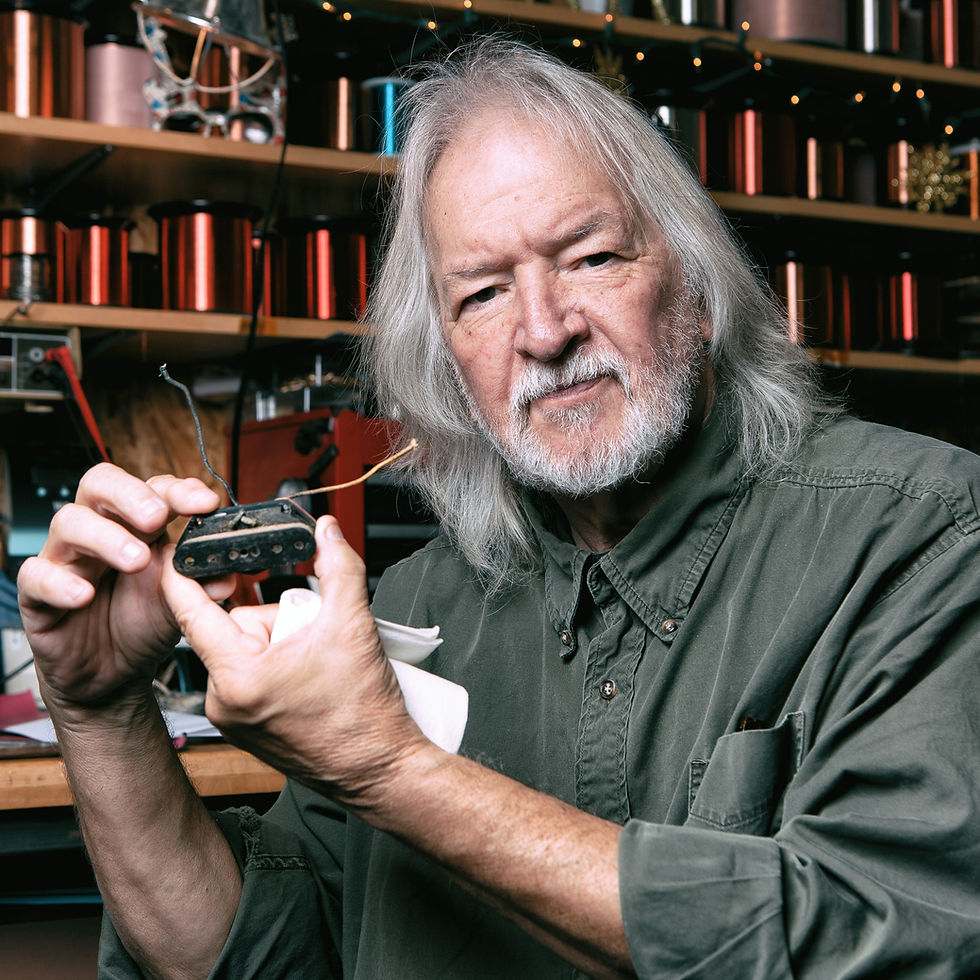
A few days ago, Jim Wagner shared his story on his Facebook page. I was eager to document it, and he kindly granted me permission to publish his story on Tone Journey. Ladies and gentlemen, in his own words, the story of Jim Wagner Pickups...

A LITTLE HISTORY After digging through more than 20 years of old websites, magazine articles, reviews, forums, artist references and memories, I realized I had never really written down the chronology of what became:
WCR → Wagner’s Custom Rewind →WCR Guitar Inc. → JWP Jim Wagner Pickups
And once I started looking at it all together, I realized something else:
This was never just my story.
It was our family's and our friends' story too.
And when I say friends, I mean a LOT of them.
Over the years I became friends with literally thousands of customers, players, builders, musicians, writers, forum members and fellow gear nuts.
There is absolutely no way I can name everybody here.
So, before I even start, I want to say this:
If your name isn't in this story, PLEASE don't think I've forgotten what you meant to me or to WCR/JWP.
Some people bought one pickup and stayed in touch for 20 years.
Some became close personal friends.
Some wrote articles.
Some made recordings and demos.
Some talked about the pickups on forums.
Some introduced me to musicians I never dreamed I would meet.
Some invited me onstage.
Some opened their homes to us.
Some simply called and talked guitars and life.
There are thousands of you, and every one of you became part of this story.
So here goes.
Early 1990s — The beginning
I started winding pickups around 1993–1994 because I was chasing a sound I couldn't get from what was commercially available.
I wanted those huge, harmonically rich tones I heard coming from the great old guitars and amps.
But genuine vintage PAFs were already expensive, increasingly unobtainable, and not all of them ( in fact not many of them) sounded great. It seems the “accidents” sounded best.
And there was another problem:
There wasn't one single “PAF specification/application/.”
The old pickups were all over the place.
Different resistance readings.
Different magnets. Original specs call for…”a magnet”..) lol
Different strengths.
Different winding characteristics.
You could find examples anywhere from roughly 6.5k to more than 10k.
So simply asking, “How did Gibson make a PAF?” didn't really solve anything.
I started experimenting. I listened to tons of famous players, what THEY sounded like, and came up with my own recipes on how to obtain them. That took some time and effort. I had spent a lot of time rewinding old pickups. Many different kinds, and from that I learned what NOT to do.
Out of sheer frustration, I finally once did everything different than the “old” ways. Different wire, different gauge and insulation, different magnet cut, invented my own potting material, different number of winds, and there it was:
Duane Allman via the Fillmore set, and the 1st clip ever was done by friend Charlie Schak (he did the “Stormy” clip). I never worked for anyone else from that day on except YOU !
That was the day he posted it on the Les Paul Forum, the same day as a really great review by “Big Al.” I always had those tones in my head; I just had to re-produce them. That became the foundation for everything that followed.
But I definitely didn't do this alone. This is where Carol belongs right at the beginning of the story.
A lot of people knew my name because I was the guy winding the pickups. What they didn't see was

everything happening behind the scenes that allowed me to keep doing it.
Carol handled advertising, ordering parts, keeping supplies coming in, early-stage soldering, keeping the house and kids in order, and a whole pile of day-to-day things that had to happen before I could concentrate on winding and developing pickups. There is no question about it: I would never have survived in this business without Carol.
While I was obsessing over wire patterns, magnets and tone, she was making sure there was actually a business left for me to obsess over. And then there were the kids: Geoff, Dillon, Rachel, and Tonysha —(now Charlotte). They grew up around all of this and helped whenever asked.
I never had to order them to do anything. They just did them when asked. And sometimes simply doing the regular chores around the place so Carol and I could keep everything moving. That was an enormous help. They also had their own lives and their own schoolwork, and all of them excelled — a LOT — in school. All got to be really good musicians. Except Geoff. Mr. Tinker (loves to take things apart, modify, fabricate, etc.), and Drone-Man extraordinaire. (Loves his metal music).
It was never just some sterile corporate operation. It was a: FAMILY BUSINESS. Happening right in the middle of family life.
WCR — The early Internet years
Before WCR Guitar Inc. became the name most guitar players remember, the business was just called:WCR
By at least 2003, guitar players were already discussing and recommending my pickups on places such as the Les Paul Forum.
Then The Gear Page came along and things really took off.
I can never thank that community enough.
Scott Peterson and Brian Scherzer were the founders, and one person I will always remember very fondly was the best moderator of all time: Big Mike.
Those early Internet communities mattered enormously to a small pickup maker. There was no massive advertising budget. No corporate marketing department. A player bought a set. Installed them. His buddy heard the guitar. Then somebody posted about them. Then somebody else asked a question. Then my phone rang.
That was pretty much the marketing department.
2003–2005 — Word spreads
During this period, discussions of my pickups started appearing on more guitar forums.
Les Paul Forum.
Harmony Central.
Seymour Duncan's forum.
The Gear Page.
And others.
Players were comparing Wagners with some of the biggest established and boutique pickup makers around.
The names Crossroads, Fillmore, DarkBurst, Godwood, etc. started becoming recognizable among serious Les Paul and PAF enthusiasts. I was watching something happen that I hadn't planned. People were building the reputation for me. Word of mouth became everything. The name that became best known in those years was:
WCR — Wagner’s Custom Rewind
and later:
WCR Guitar Inc. (Because I even sold some WCR Guitars as well).
Apparently, the Internet has never completely accepted that the name eventually changed.
Even today people still call the pickups WCR whether they're 20 years old or brand new.
You'll see:
WCR
JWP
Jim Wagner Pickups
Jim Wagner WCR
WCR/JWP
JWP Jim Wagner Pickups
Sometimes all of them mashed together. For the record: They're all me.

2004–2005 — Europe takes notice
One of the early moments that told me something serious was happening came through the German guitar magazine through friend/customer Udo Pipper:
GITARRE & BASS
They tested WCR pickups as part of their PAF comparisons. Suddenly my pickups were being evaluated in the same conversation as major and respected manufacturers such as Gibson, Seymour Duncan, Lindy Fralin and others. My good friend and awesome player Udo Pipper informed me that I had taken: 1st, 2nd and 4th place in their shootout. For a tiny family-run American pickup operation, seeing WCR in that company was quite a moment.
And Udo himself became another one of those people/friends I met because of this crazy little business and who helped spread the word. There are some vids of him playing on my site. Demos.
2005–2007 — The designs multiply
By this point there was a growing family of Wagner pickups. Among them:
Crossroads
Fillmore
DarkBurst
Godwood
BetSet
Moore/Green
And later:
American Steele
IronMan
CherryBucker
MurKat
SR Series
and others.
I never wanted to make ten pickups that were essentially the same thing with different labels.
Each design was intended to do something different.
Different attack.
Different harmonics.
Different compression.
Different response to the player's hands.
Different relationship between guitar and amplifier.
I wasn't interested in winning a resistance-reading contest.
I wanted the guitar to react differently.
The Bookends Of Great Tone
One of the best friendships to come out of those years was with: JIM SEAVALL OF SCUMBACK SPEAKERS. Jim and I had a lot in common. He was chasing great tone from the speaker end of the signal chain. I was chasing it from the pickup end. So naturally we started having some fun with it.
We would advertise and promote each other in posts and began calling ourselves:
THE BOOKENDS OF GREAT TONE (Jim’s idea ! lol) Pickups at one end. Speakers at the other.
It wasn't some corporate cross-marketing strategy cooked up in a boardroom. It was two guys who were nuts about guitar tone, respected what the other guy was doing, and genuinely enjoyed helping each other. And we had a hell of a lot of fun. Trade shows became as much about seeing friends as doing business. A very special thing to go to was the L.A. Amp Show, put on by friend Loni Spector at the Van Nuys Air-Tel. Everyone participating would get their own demo room for 3 days, no limits on volume, etc. So traveling, talking gear, playing guitars, jamming, laughing, and, naturally, getting into a certain amount of good-natured trouble was a pretty common thing for us. Jim Seavall and the Scumback years are a huge piece of that story. The Bookends Of Great Tone had a pretty good run. And still doing it.
One of the great memories was traveling to Greensboro, North Carolina, where we'd have awesome 3-day jams over the years at our friend: Jimmy Murray's T-shirt factory. The Les Paul Jam and Tone Conference. People from all over the U.S. would show up for his 3-day jams. They would bring their LPs, sometimes their entire collections, amp builders, pedal builders, luthiers, and on and on. More than once. Even twice a year. He would even put some of us up at his house. And his girlfriend Dru is just as awesome. They put up with a lot……lol
Thanks again, Jimmy!

MANZO !!
I also have to add to that time period Gabriel Manzo of Malo. I was introduced to him by another good friend Vinnie Smith of V-Picks.com (Another story as well !). They lived down the street from each other. He played with Jorge’ Santana in Malo for, hell, I don’t know.. 40 years or so? Anyhow, we became close friends, and Carol and I consider him and his awesome wife Dawn Manzo to be nothing less than family. That guy can play like no other. And when Dawn fires up the keys, Gabe has to step up his game…..lol
Those memories don't show up on a sales report.
But they're some of the best memories I have from the entire business.
The pickup business introduced me to customers.
Customers became friends.
Friends introduced me to other friends.
And suddenly this tiny operation had created relationships all over the country and around the world.
This is also where I have to mention my longtime friend: PAUL SWOROBUK OF FLORIDA
Paul has been a longtime friend and longtime user and supporter of my stuff. He's another perfect example of what happened again and again during these years. A relationship might start because somebody wanted pickups. Before long, we weren't talking only about pickups anymore. We were friends. And years later, we were still friends. Paul is one of those people I don't want accidentally disappearing from the story simply because there are so many names to remember. And there are literally thousands of stories like that. That's why naming everybody is impossible.
2007 — Premier Guitar
Another enormous milestone came in March 2007, when Premier Guitar published my article:
“HANDWOUND FOR TONE”
Instead of simply reviewing my pickups, they gave me the opportunity to explain how I approached pickup winding and why I did certain things differently. At that point I wrote that I had already been hand-winding pickups for approximately 15 years. That article preserved an important connection in the history: Having a major guitar publication allow me to explain my own design philosophy was something special.
I also appreciate all the other writers, reviewers, editors, bloggers and gear sites who spent their own time listening to these pickups and writing about them. Some reviews were glowing. Some people preferred one model over another. That's the way it should be.
Tone is personal. But the fact that people cared enough to listen carefully and write about what I had made meant a lot.
The artist years
As WCR became better known, the pickups started finding their way into the guitars of professional musicians. My Artist Page records and surviving web history include names such as:
Gabriel Manzo-(Malo), Brad Whitford — (Aerosmith), Joe Bonamassa, Randy Bachman – (Bachman-Turner Overdrive), Peter Thorn, Greg Martin — (The Kentucky Headhunters / Rufus Huff), Clay Cook — (Zac Brown Band / Marshall Tucker Band), Keith Nelson — (Buckcherry), Stevie D — (Buckcherry), Stuart Swanlund — (The Marshall Tucker Band), Chris Hicks —( The Marshall Tucker Band), Jimmy Allen —( Puddle of Mudd), Jorge Santana-(Malo).
and many, many other professional, touring and studio players you can see on my Artist Page. The list is extensive and still amazes me. Then something happened that was even better than selling pickups. I actually got to:
PLAY MUSIC WITH SOME OF MY HEROES

Because of the musicians and customers I met through this business, I ended up getting opportunities I couldn't possibly have imagined when I started winding pickups.
I got to play with musicians like:
The Marshall Tucker Band (they were 1st because of dear deceased friend Stuart Swanlund)
I got to jam with:
Bo Bice
Whenever I get a chance, we get to go to Gabriel and Dawn Manzo’s (always fun. Jam, eat, visit, etc.) Sometimes we just get to have too much fun…. lol The pickups opened doors. But the people behind those doors were the real reward.
Keith Nelson and Buckcherry
Keith became one of the strongest supporters of my work. In an interview with Vintage Guitar, he talked about putting WCR pickups into most of his newer guitars and discussed what he liked about the way they combined output with the natural character of the guitar and amplifier. When on the road, they would order some pickups to have shipped overnight and be waiting for them at the next gig ! Keith said I had: “captured something” with them. That's one of those compliments that sticks with you. Keith and Stevie D used several of my designs. Eventually that relationship also helped lead to development of the:
CHERRYBUCKER
And then came something even more personal. After the success of Buckcherry's: “Crazy Bitch”
Keith and Stevie gave both Carol and I our own Gold and Platinum record copies. Think about that one. Carol and I are running this little family pickup business. I'm sitting there winding copper wire around bobbins. And suddenly we're holding Gold and Platinum records presented to us by the musicians themselves.
There were so many great comments and relationships along the way that it is impossible to reproduce them all here.
Those people helped enormously too.
Once, the head guy at Capitol Records called (his name escapes me right now) , ordered several sets of pickups, and gifted us with a box of CDs of our favorite artists. My favorite CD of that batch was, of course, the Band of Gypsies.
Many, many of those customers became not only customers.
They became friends. Hell, as far as I'm concerned: THEY'RE ALL FRIENDS.
The writers, reviewers and forum guys
There is another group that deserves a HUGE thank-you:
The people who actually took the time to write about this stuff.
Premier Guitar.
Vintage Guitar.
Gitarre & Bass.
M Music & Musicians.
Independent sites like Guitar Gear, GAD, and other reviewers who tore into the details of what the pickups did.
People making demos.
People posting clips.
People comparing them on forums.
People writing gigantic reviews that probably took longer to write than the pickup took me to wind.
And communities like:
The Gear Page
Les Paul Forum
Harmony Central
Seymour Duncan Forum
Rig-Talk
PRS forums
and many more.
Somebody making one enthusiastic post could cause my phone to ring all afternoon.
That's how important those people were and are to a small company.
There were no Facebook targeted ads back then.
No giant social-media department.
The guitar community itself spread the word.
2008–2012 — WCR Guitar Inc. becomes established boutique gear
By this point, WCR pickups were being reviewed, discussed and compared across a huge portion of the guitar Internet.
Magazine reviews appeared.
Independent reviews appeared.
Videos appeared.
Forum discussions became enormous.
Players debated:
Crossroads vs. DarkBurst
DarkBurst vs. Godwood
Fillmore vs. Crossroads
WCR vs. everybody else
But it told me something important: People cared enough about the sound to argue about it.
The American Steele Set became another important combination. And the name itself has a personal story. It was named after my good friend: Anthony Steele who really liked that combination. Anthony and I got to meet up and jam on more than one occasion (In Greensboro of course). Anthony has an interesting history all of his own. Buddy Miles being one of them. I went to the Gibson Summer Jam one summer, and as far as I’m concerned, Ant blew away everyone there. He also did quite a few clips for me early on, and they are on my site.
Again:
Customer.
Player.
Friend.
That pattern happened over and over throughout this story.

The American Steele was designed as two complementary voices rather than simply putting two identical-output pickups in the same guitar. It became one of the better-known WCR/JWP combinations. And then it became responsible for one of the moments in this entire history that I will never forget. First though, I have to also thank GAD (Gary A. Donahue), who wrote one of the most memorable independent reviews of my work back in 2010. He opened by saying WCR pickups were “so good, I felt the need to tell the world,” and described their combination of “power AND articulation” as something he'd never experienced from another pickup. What really cracked me up was that after selling the Les Paul they were in, he kept my pickups; then sold another guitar and kept them again, eventually putting them in his safe until he found another guitar worthy of them. He called me WCR's chief designer, head winder, and “all around great guy,” and joked that maybe I was winding them with unicorn hair or meteorite shavings because he couldn't figure out how I was doing it. He later installed my American Steele set in a Jackson and again wrote about the growl, articulation and how thrilled he was with them. GAD, thank you for taking my work seriously enough to write all of that—you gave a little pickup company the kind of word-of-mouth publicity money couldn't buy.
Then came what I — and many others — still consider one of the greatest pickup shootouts ever done:
JAMES LUGO'S HOLLYWOOD PICKUP SHOOTOUT
at Vocal Asylum Recorders in Los Angeles.
This wasn't somebody plugging twenty pickups into a little practice amp in a bedroom. James was a seriously good player, producer and engineer working his real Los Angeles recording environment. As well as doing some Red Carpet and vocal coaching work for American Idol.
The shootout used serious recording equipment and studio monitoring, with pickups compared under controlled conditions so people could actually hear how they worked in a musical context.
Same guitar, same amps, same player, same licks, same speakers, and same recording gear.
James called me up and asked if I wanted to compete.
There were approximately 35 other entries in the Great Hollywood Pickup Shootout.
A pile of serious boutique and custom-shop pickups.
My entry was:
THE AMERICAN STEELE SET.
I wasn't sitting there telling anybody what they were supposed to hear.
I wasn't influencing the result.
The pickups had to stand on their own.
Then my phone rang.
It was:
JAMES LUGO.
James told me I had won.
That alone would have made my day.
But then he said something else.
I remember him telling me that I hadn't merely beaten the others.
His words to me were:
“YOU CRUSHED THEM.”
Sorry, James. That is one quote I am NEVER giving up. And James didn't stop there. After the shootout, James Lugo made demos of several of my other pickups for me. He put his playing, ears, recording ability and reputation behind demonstrations that allowed players to actually hear what those designs could do. For a little family company like ours, that was HUGE. So, this history absolutely requires a:
HUGE THANK YOU TO JAMES LUGO.
For the shootout, for the demos, for the support, for putting in all that work, for believing in what I was making. And for one phone call I will apparently still be talking about when I'm 100 years old. (which now doesn’t seem that far off…. Then I went considerably farther away from traditional PAF territory. A lot of that came due to the nagging of another good friend and supporter:
Jason Tormund — aka The Tattooed Carrot.

The IRONMAN
was about serious power without turning the sound into mud, and no batteries needed. High output is easy. High output while maintaining articulation, harmonic content, clarity and string separation is another matter entirely. The IronMan became its own animal. Actually a very good all-around pickup. And years later, people are still using them, searching for them and hunting old ones down.
In 2007 it was named Pickup Of the Year in Premiere Guitar Magazine.
2010s — WCR becomes JWP
Eventually the business moved ( a short distance) and transitioned from:
WCR
to:
JWP — JIM WAGNER PICKUPS
at:
But something funny happened. Nobody stopped calling them WCR.
So today you'll find guitar players and sellers writing:
WCR
JWP
Jim Wagner Pickups
WCR/JWP
Jim Wagner WCR
and occasionally every possible combination in a single listing.
For the record:
THEY'RE ALL ME.
2015–2020 — The old pickups don't disappear
Something I didn't appreciate until doing this research is just how much discussion continued long after some of the original designs were introduced.
People were still trading old WCR sets.
Still looking for Crossroads.
Still comparing DarkBursts and Godwoods.
Still hunting IronMans.
Still talking about Fillmores.
Still asking which Wagner pickup belonged in which guitar.
Many players even remove the JWP/WCR pickups from guitars they were selling because they refused to let the pickups go with the guitar.
I've seen so, so many stories like that….
That's one hell of a compliment to a pickup maker.
2020–2025 — Still being talked about
More than two decades after the earliest Internet discussions we've found, people were still starting brand-new threads about my pickups.
PRS forums.
Rig-Talk.
Jazz guitar forums.
The Tone Rooms.
Reverb.
Facebook.
YouTube.
And many others.
People who weren't even around when CR Coils started were finding old WCR pickups and asking: “Who is Jim Wagner and what exactly is this thing?” Meanwhile guys who bought one twenty years earlier were answering them. That is pretty damn cool.
THE PART THAT SURPRISED ME
When I started to research all of this, I expected maybe a handful of old webpages. Instead, we've already identified: AROUND 60 DISTINCT WEBSITES containing references to me, CR Coils, WCR, Wagner’s Custom Rewind, JWP, the individual pickup designs, reviews, artists, forum discussions, articles and comments. And that's only what remains searchable today.
Think about how much of the early Internet has disappeared.
Old websites.
Dead forums.
Broken image hosts.
Missing magazine archives.
Pages that were never digitized.
Hundreds of conversations that vanished when a forum changed software or shut down.
So the actual footprint was undoubtedly much larger.
AND THEN THERE ARE THE PEOPLE
This is the part that matters more to me now. How could I possibly make a complete list? I can't.
There are literally thousands of people who became part of my life because of these pickups. If I started trying to name everybody, this Facebook post really WOULD turn into a book.
People who called simply to say: “Jim, you need to hear what this guitar sounds like now.”
Those people mattered. Every one of them. So if you're reading this and thinking: “Hey Wagner, you forgot ME!” I probably didn't forget you. I'm just 72 years old and trying to squeeze several decades and several thousand people into a Facebook post. Give me a break.

LOOKING BACK
When I started doing this, I wasn't trying to build a legacy, I just wanted my SG to sound like the tones in my head.
I wasn't thinking about magazines.
I wasn't thinking about professional artists.
I wasn't thinking about Gold and Platinum records.
I wasn't thinking about winning pickup shootouts.
I wasn't imagining flying or driving across the country, going to trade shows and winding up jamming in Jimmy Murray's T-shirt factory in Greensboro, North Carolina. Playing with Marshall Tucker Band, Bo Bice, etc.
I wasn't thinking that so many other customers would still be my friends years and years later.
I certainly wasn't thinking that people would still be arguing about my pickups on the Internet more than twenty years later.
I was just trying to make my own damn guitar sound right.
But looking back now, saying: “I did this” wouldn't be accurate. WE ALL DID THIS! Carol was there making the business work while I was buried in winding pickups. Geoff, Dillon, Rachel and Charlotte grew up as part of it. They watched a crazy little pickup experiment turn into something that traveled all over the world. Then there were our friends. And the customers who became friends.
Hell: THEY'RE ALL FRIENDS AS FAR AS I'M CONCERNED. So maybe the best description isn't: One winding machine. One set of hands. Maybe it's:
ONE WINDING MACHINE.
ONE FAMILY.
THOUSANDS OF FRIENDS.
AND A WHOLE LOT OF GUITARS.
TONE.
So, if you made it this far, I want to see something. If you have an old WCR, Wagner’s Custom Rewind or JWP pickup — whether you bought it last year or more than 20 years ago — post a picture of the guitar.
Tell me which pickup is in it.
Tell me approximately when you got it.
TELL ME THE STORY BEHIND IT.
Because after finally seeing all of this history laid out together and realizing how many people, friendships, guitars, recordings, stages, articles, arguments, laughs and miles are tied up in it...I am sure I won’t be able to keep up with it all in this thread, but you can be sure I will at least see it all.
I'm not just starting to think there might be a book hiding in here.
I'M STARTING TO THINK WE ALREADY LIVED IT.
by Jim Wagner,
22.08.2026


Comments